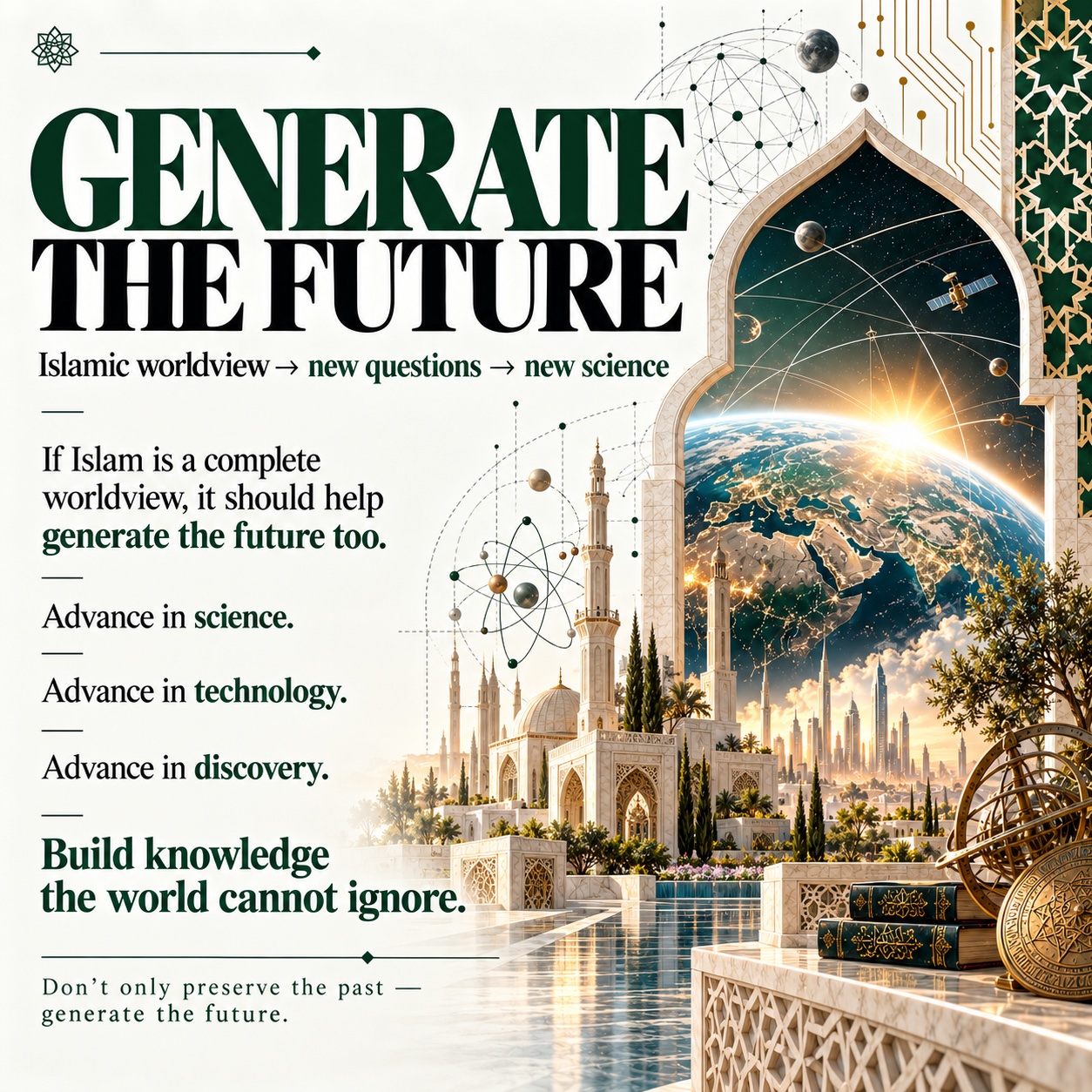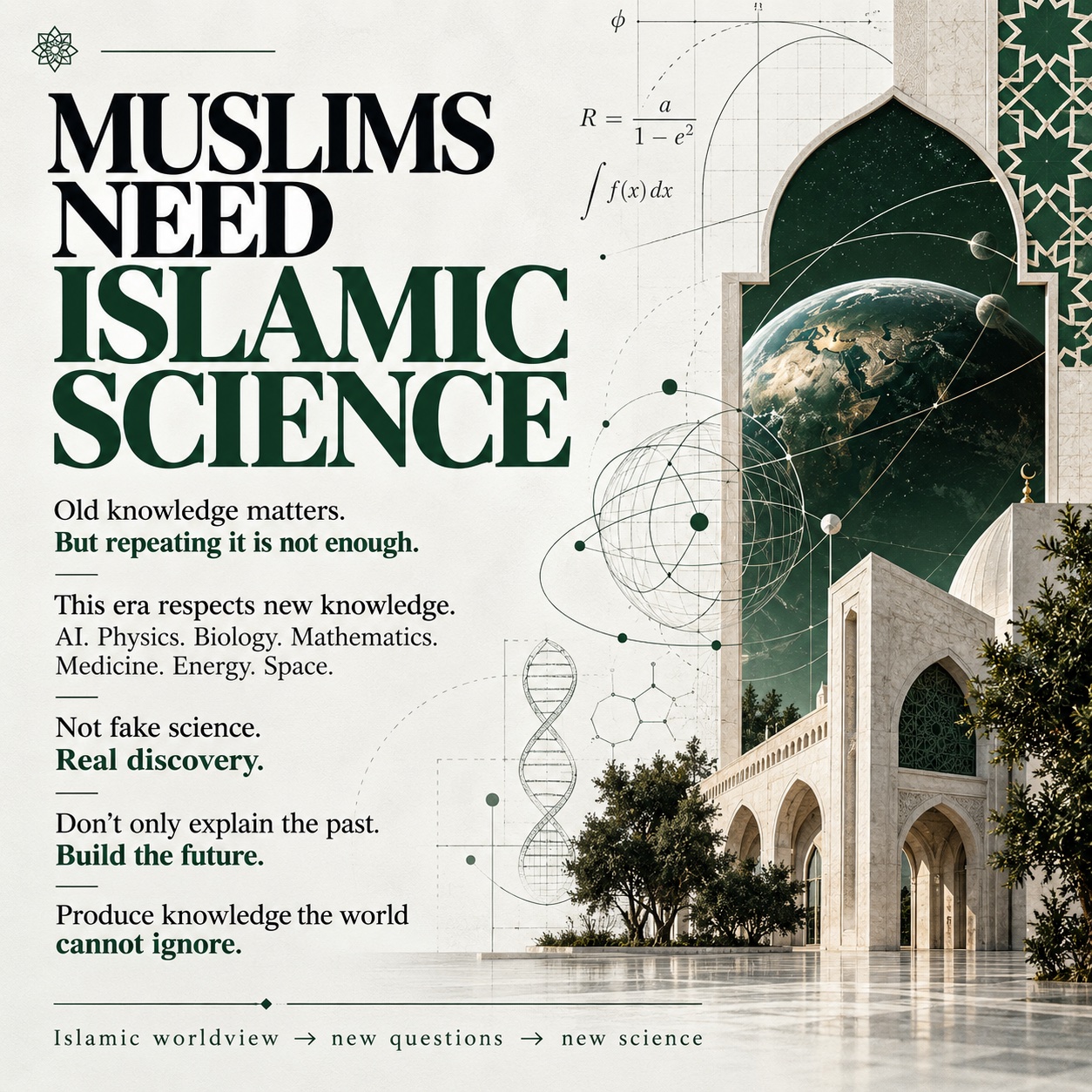
Muslims cannot build the future by only repeating the past. Traditional Islamic knowledge matters, classical scholarship matters, and the intellectual history of Islam matters. Tafsir, hadith, fiqh, philosophy, theology, mathematics, medicine, astronomy, and the work of earlier Muslim scholars all have real value. But in this era, preserving and explaining old knowledge alone is not enough. The world today is being shaped by artificial intelligence, physics, biology, neuroscience, mathematics, medicine, engineering, energy, space, and computation. If Muslims want to become intellectually relevant again, they have to participate in these frontiers and produce new knowledge of their own.
For too long, Muslim intellectual discussion has often remained focused on what Muslims achieved centuries ago. We talk about Ibn Sina, Al-Khwarizmi, Ibn al-Haytham, Muslim physicians, astronomers, mathematicians, and philosophers. That history deserves respect, but there is an important point we often miss: those people were not respected because they kept talking about older Muslim achievements. They were respected because they were producing knowledge in their own time. They were discovering, experimenting, calculating, writing, building, and asking questions that mattered to the world around them. A civilization cannot become scientifically relevant again by constantly reminding everyone that it used to be scientifically relevant.
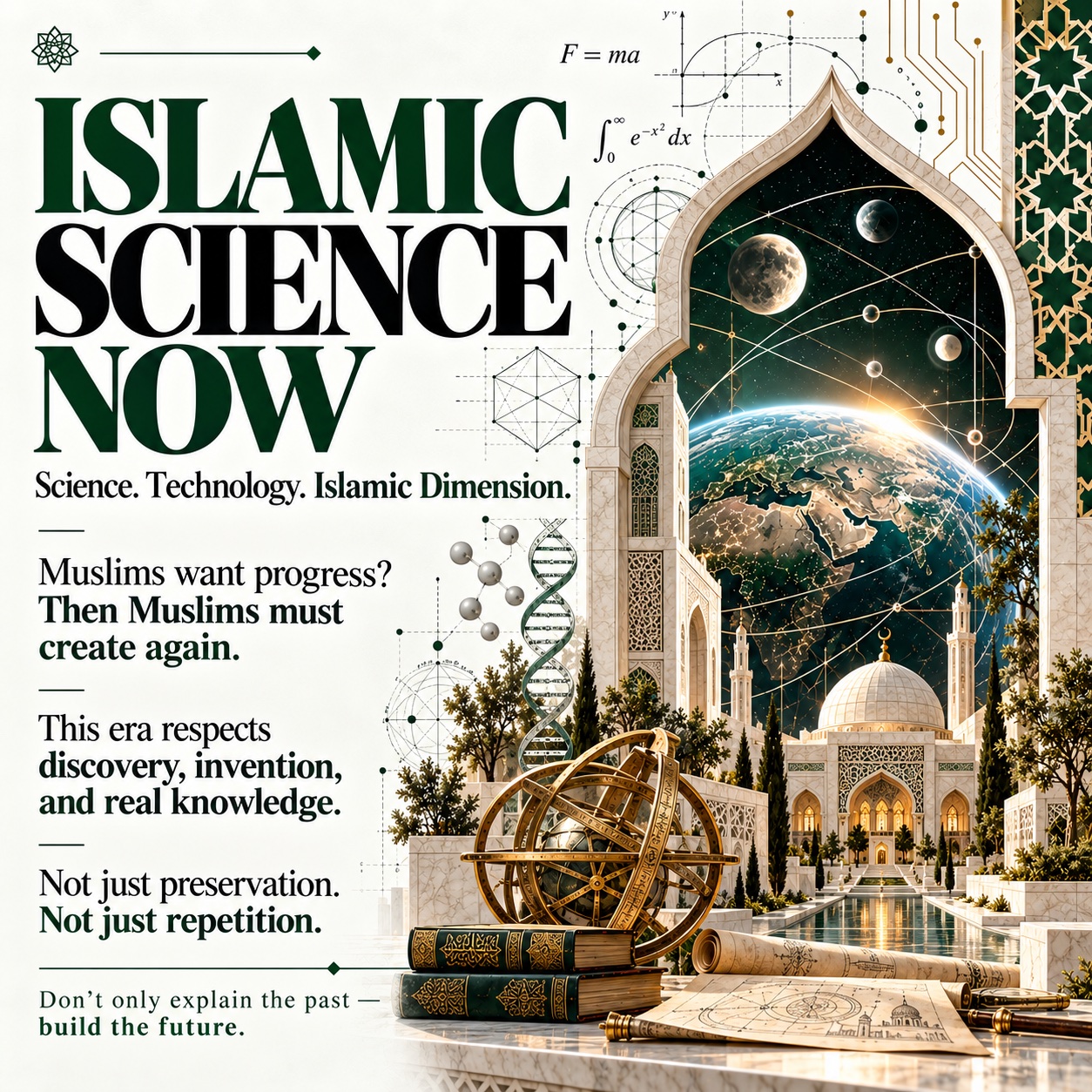
This era respects creation, invention, discovery, and practical contribution. The world pays attention to people who solve difficult problems, create new technologies, generate new theories, and expand the limits of human knowledge. That is why only explaining Islam, defending Islam, or repeating Islamic history will not be enough to move people intellectually today. If Muslims want influence again, they need to enter the scientific frontier directly. They need serious work in AI, physics, biology, mathematics, medicine, engineering, energy, space, and every other field where the future is being built. Not merely as users and consumers of technology, but as creators.
When I say “Islamic science,” I do not mean fake science, symbolic science, or taking every new discovery and immediately trying to prove that the Quran already mentioned it 1,400 years ago. That kind of thinking often turns science into apologetics. Real Islamic science should be much deeper than that. The real question is whether an Islamic worldview can generate new scientific questions. Can Islamic ideas about reality, knowledge, consciousness, nature, humanity, ethics, causality, and purpose influence the kind of questions researchers ask? Can Islamic epistemology contribute something new to how we think about intelligence, life, the universe, technology, and scientific responsibility? That is a much more serious intellectual project.
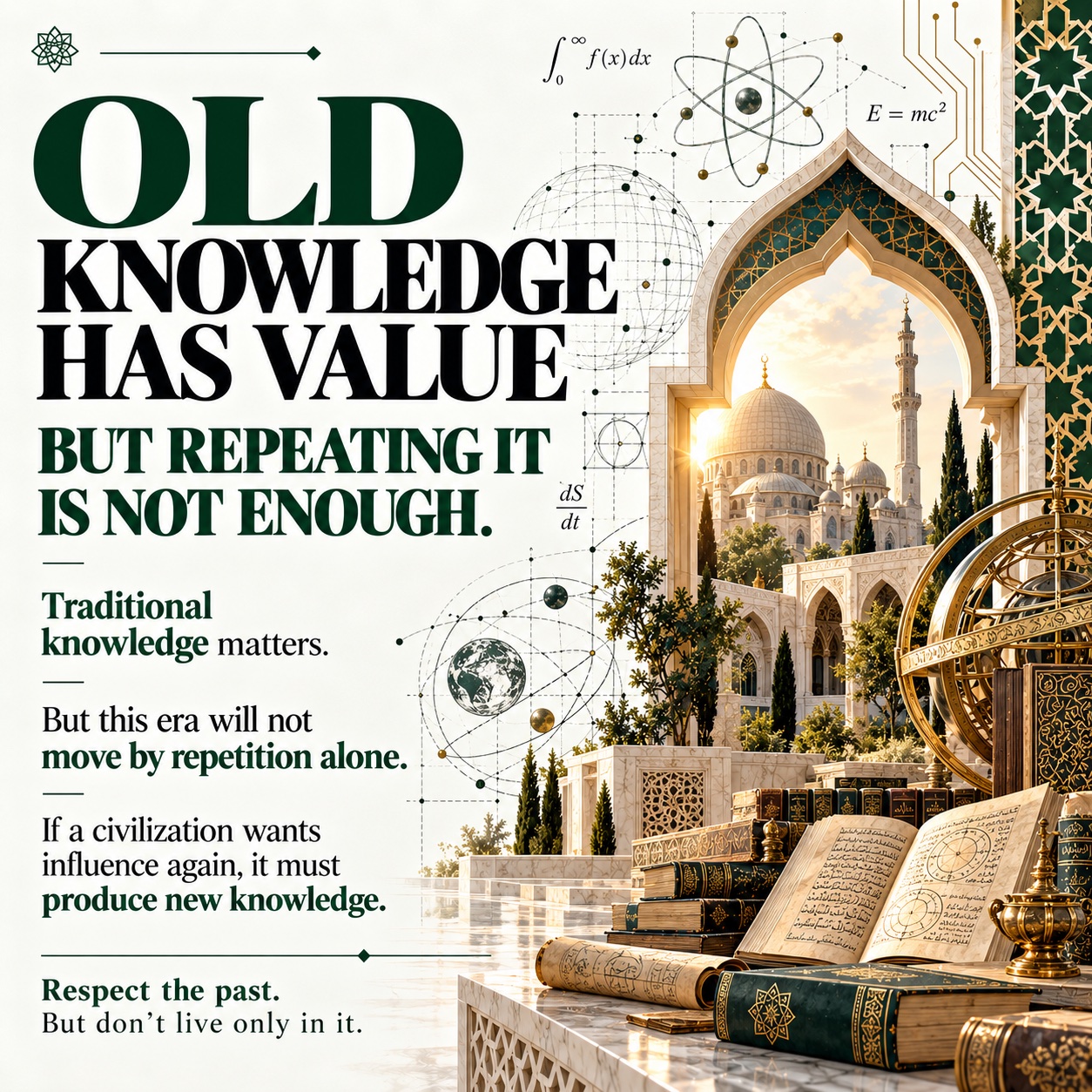
The Muslim world has become very strong at preservation. We preserve texts, traditions, interpretations, laws, identities, and historical memory. Preservation is important because without it a civilization loses itself. But preservation alone does not generate a scientific civilization. A living intellectual tradition must also produce. It must produce theories, experiments, technologies, institutions, questions, methods, and new ways of understanding reality. The real shift Muslims need is from only preserving knowledge to generating knowledge.
This also means changing the standard by which intellectual success is measured. Instead of constantly asking whether an old Islamic text already contained a modern scientific idea, we should ask a much harder question: can we discover something the world does not yet know? That one question changes everything. It moves the mindset from defense to creation, from nostalgia to contribution, and from historical pride to present-day achievement.
If Islam is understood as a complete worldview, then its intellectual role should not be limited to interpreting the past. A worldview should shape the way people think about reality, knowledge, ethics, intelligence, humanity, and the future. That does not mean turning every laboratory into a religious institution or forcing theology into scientific experiments. It means that Muslim scientists should be confident enough to think from their own philosophical foundations rather than simply importing every assumption from outside without questioning it. Islamic science should not be “Islam versus science,” and it should not be “science proves Islam.” The more interesting question is: what kind of science could emerge from an Islamic intellectual framework?
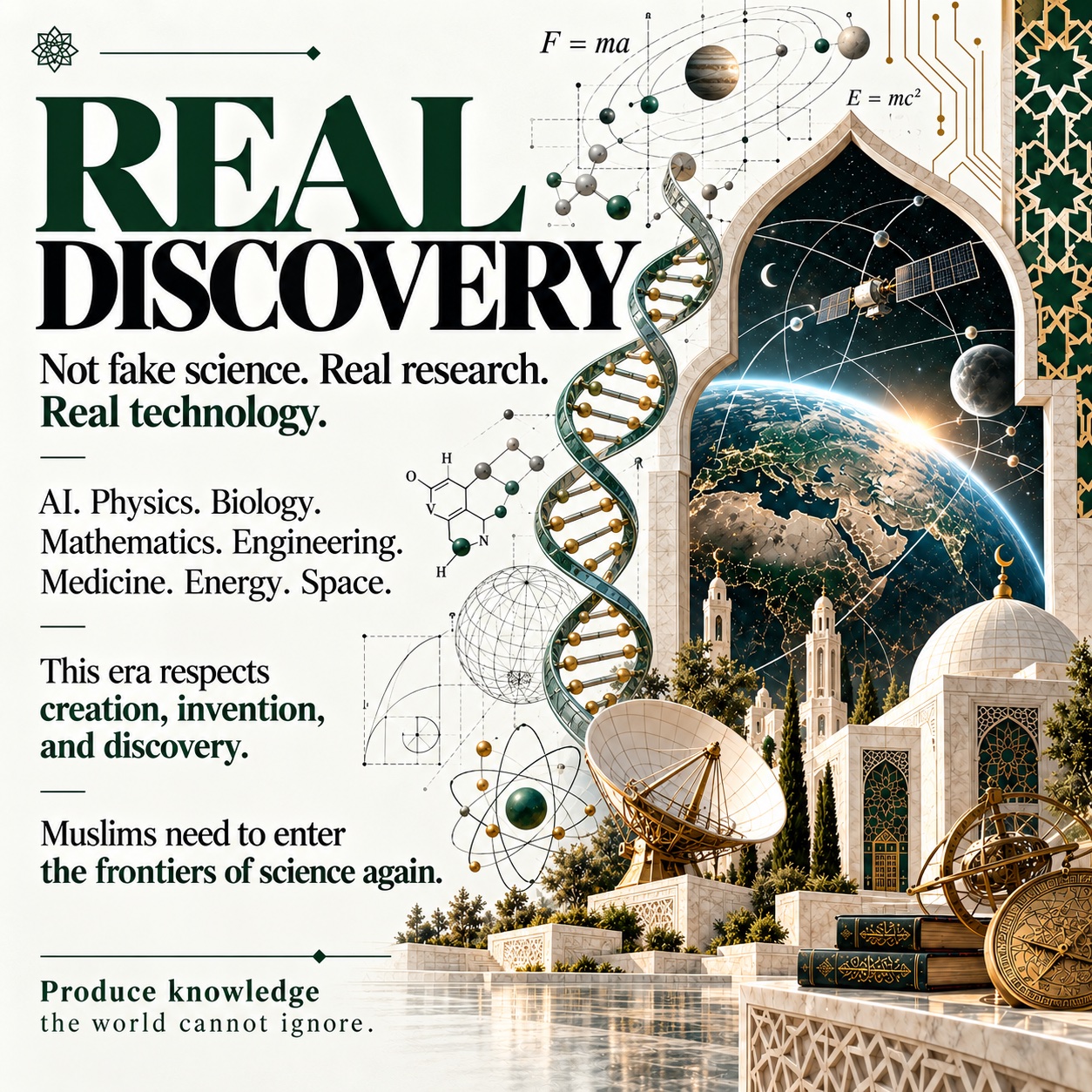
The Muslim world does not need to keep asking others to respect its past. It needs to produce work that commands attention in the present. Discover something. Build something. Solve something. Create a theory. Develop a technology. Establish serious research institutions. Produce knowledge that the world cannot ignore. If the work is strong enough, respect will follow naturally.
Traditional knowledge has value, but repeating it is not enough. Muslims should respect the past without becoming trapped inside it. The challenge now is to advance in science, advance in technology, advance in discovery, and once again become producers of knowledge.
Do not only preserve the past. Generate the future.